-
The U.S. Power Grid Is At Risk Of Catastrophic Failure? (It may be an over-statement to refer to the U.S. power grid as crumbling, but in many parts of the country that’s exactly the case. The North American power grid is old.)
Many of us have experienced a power outage at one time or another. Most of the time the duration of the outage is measured in hours, maybe a day, and in rare instances – a week or more.
The outages also tend to be localized and repairs happen quickly or power is “borrowed” from a nearby utility or network and rerouted to the affected area. The experience is usually a frustrating inconvenience and most hospitals and critical systems have backup power to get through the outage.
But what if…?
What If The National Grid Fails?
It’s never happened in the United States, but some countries have had widespread power outages affecting most of their territory. Russia’s cyber attack on Ukraine’s grid in 2015 knocked about 60 substations offline, leaving 230,000 people in the dark. It was an ominous threat, but once again, the outage only lasted 1 to 6 hours.
It seems like most power outages, regardless of the extent, have a short duration and are only an inconvenience. But there’s a problem.
Crumbling Infrastructure
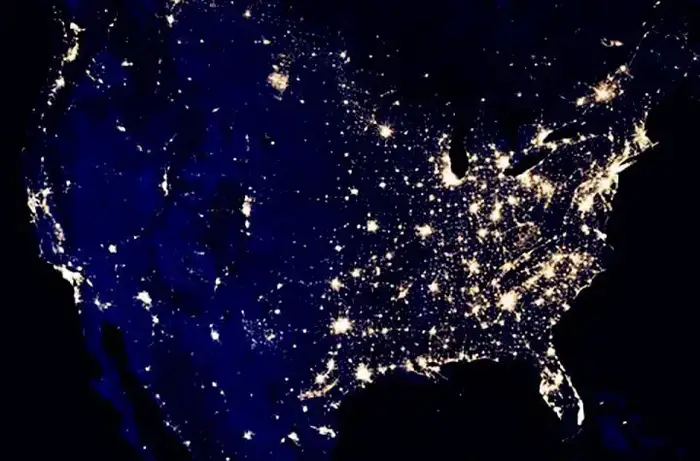
It may be an over-statement to refer to the U.S. power grid as crumbling, but in many parts of the country that’s exactly the case. The North American power grid is old.
The original design was engineered to only last 50 years with the assumption that future generations would upgrade and improve the system. That has rarely happened unless a system or station has a significant failure, and even then the fix falls in the category of repairs, not replacement.
As a result, there are parts of the North American grid that are about 100 years old. In a study done by the American Society of Engineers the power grid was graded D+ for reliability. It’s troubling to think that a system so critical to our survival is in the range of a failing grade. Worse, some estimates put a critical repair to the North American grid at $5 trillion dollars!
The Failure of Complex Systems
The North American Power grid may be one of the most complex systems on Earth. And it’s important to note that the power grid is just not about the U.S.
The latest news is shocking!!!
Experts predict that an EMP strike that wipes out electricity across the nation would ultimately lead to the demise of up to 90% of the population.
However, this figure begs an important question: if we were able to live thousands of years without even the concept of electricity, why would we suddenly all die without it?

The grid stretches across the U.S. and up into Canada powering and ultimately affecting all of North America.
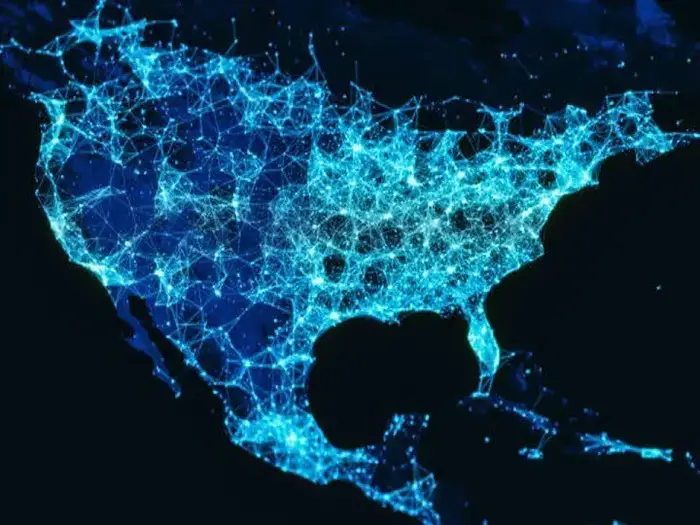
On a basic level, the grid is composed of 3 interconnections serving many states and provinces with the exception of a single interconnection in Texas. The fragility of any interconnection was demonstrated in the winter of 2021 when weather extremes induced by climate change almost brought down the entire Texas interconnection.

But while 3 basic grid interconnections may seem simple it gets worse.
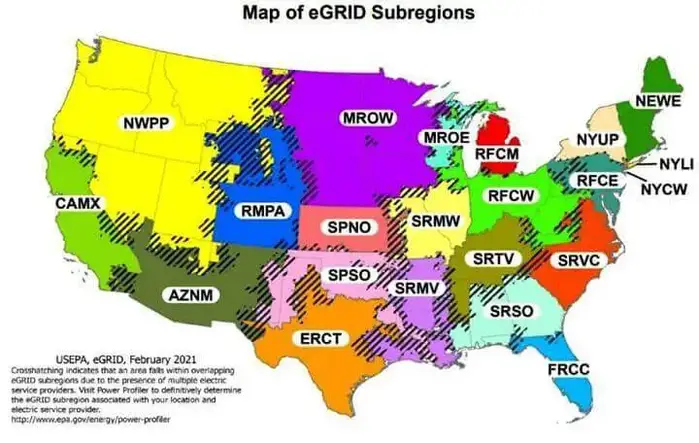
Local power service providers are broken down into subregions within the intersections. These subregions are serviced by local utilities that have varying degrees of integrity in terms of the age and condition of their equipment and power stations. But it gets more complex.
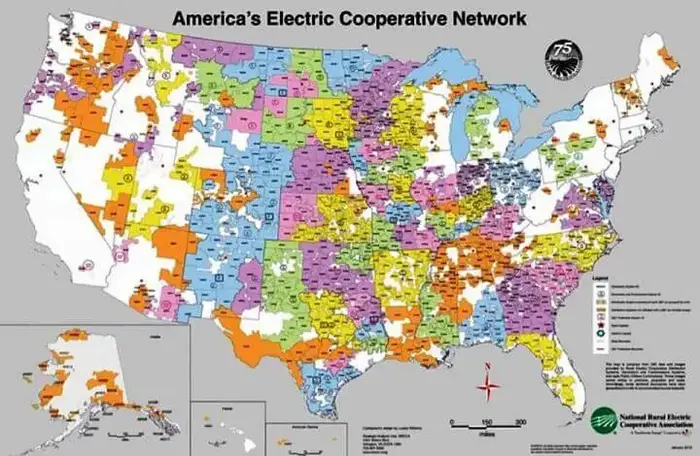
The power grid that exists today was first built after World War II from designs dating back to Thomas Edison, using technology that primarily dates back to the ’60s and ’70s. Its 7,000 power plants are connected by power lines with a combined total of more than 5 million miles, all managed by 3,300 utilities serving 150 million customers.
According to industry group Edison Electric Institute. The whole system is valued at $876 billion. No one person owns or controls it. It’s 3,300 different companies, both public and private sector, that own or operate little pieces of the electric grid. The result is that no single entity government or otherwise has the ability or authority to manage it.
How Critical is the Grid?
According to a report from the congressionally funded EMP Commission, power grid failure for one year would result in the death of nine out of every 10 Americans. The first to die would be people dependent on medical assistance with the majority dying from starvation.
If the grid failure was unique to North America, it would also make the U.S. a prime and easy target for any rogue nation looking to take advantage.
We Take it for Granted
It’s not just about losing lights at night, packing some food from the refrigerator and freezer into a cooler or wearing warm clothes and lots of blankets in the winter.
Systems and services surrounding us are dependent on electricity and without power there are no grocery stores or pharmacies, no gas stations or hardware stores, no local doctors or dentists, no traffic lights, banks, basic communication, water, and everything else we assume will always be available.
Want to prep but not sure where to begin?
Hospitals and doctors will be overrun; police and fire departments overwhelmed, and the continuing darkness of every night will bring lingering uncertainty and fears of what’s to come in the morning.
Ominous Signs
According to statistics gathered by the Department of Energy, major blackouts are on the upswing. Over the past two decades, blackouts impacting at least 50,000 customers in the U.S. have increased 124 percent, according to DOE data.
While customers in Japan lose power for an average 4 minutes per year, customers in the American upper Midwest lose power for an average 92 minutes per year, and customers in the upper Northwest lose power for an average 214 minutes per year. Those estimates exclude extreme events like severe storms and fires and those have been increasing over the past two decades.
The durations are still being measured in minutes and hours, but over time the trend can easily lead to days and weeks. Making matters worse is that the vulnerability of our grid is growing due to new and emerging threats.
The 7 Greatest Threats to the Grid
These aren’t ranked in order. Any of them could occur and all have in fact, happened in the past. Some would have worldwide impacts while others occur as highly targeted and intentional or unintentional events affecting a continent, country, or region.
1. Cyberattack
China invented the cyberattack and Russia, North Korea, and Iran have also engaged in varying degrees of cyberattacks over the past decade. Some of these cyberattacks have been launched against various utilities around the world including the United States.
Some of these attacks were criminally motivated using ransomware to extort money. Others were in the category of military operations. Here are just a few of the most recent cyberattacks against utilities.
Colonial Pipeline – May 6, 2021
Colonial Pipeline is the largest fuel pipeline in the U.S. and the ransomware attack resulted in a $4.4 million ransom payment to a ransomware gang.
The FBI later helped to recover a significant portion of the ransom, but it was another sign of how vulnerable a utility can be to cyberattacks. The outage resulted in gasoline shortages, shutting down services, promoting panic-buying among motorists and escalated gas costs.
The attack happened because of an employee’s compromised password. It seems that the company may have missed out on multi-factor authentication, a basic cybersecurity tool, to protect itself.
OPEL and Electrobras – February 2021
The Brazilian-utility companies COPEL and Electrobras was attacked by seemingly the same ransomware gang that attacked Colonial Pipelines. The ‘DarkSide’extracted 1,000 gigs of data from COPEL’s systems, while unidentified ransomware struck Electrobras. Both electricity providers had to disconnect from the National Interconnected System which caused outages to many in the country.
Delta-Montrose Electric Association (DMEA) – January 2022
The Colorado energy company had to shut down 90% of its internal controls in January 2022 due to malicious cyberware that wiped 25 years of historical data. The energy company then needed to inform its customers about the multiple energy bills they might receive.
Amsterdam-Rotterdam-Antwerp (ARA)- February 2022
The ARA cyberattack occurred just a few months after a minor but similar attack on two German firms that led to the disruption of petrol supplies in northern parts of Germany. This time it had bigger implications and created a momentary continental energy crisis.
And it Won’t Stop
Every day our power grid is tested by foreign hackers attempting to infiltrate and find ways of taking control and cutting off power. The cutting edge of cyber-warfare continues to be China. Unfortunately, our defenses against cyberattacks continue to be weak. It is believed in fact at the highest levels of our intelligence community that China could shut down our power grid at any time.
2. Physical Attack
A physical attack involves the use of explosives or weapons to physically attack and destroy electric power generation equipment. What’s ominous is that so many substations and transformers are located in remote locations with little or no security other than a chain link fence. No personnel are near many of these locations and even something as basic as a security camera is often missing.
Proof of this vulnerability occurred on April 16th, 2013. Shortly before 1:30 a.m. one or more people methodically cut communication cables near a Pacific Gas & Electric substation in San Jose, sprayed more than 100 rifle bullets and knocked out 17 of the station’s 23 transformers before fleeing and avoiding capture.
The utility was able to prevent a power failure by diverting electricity from other areas, but the damage took 27 days to repair. The Federal Bureau of Investigation has been investigated the attack, but to this day says it has no suspects.
Transformers are the weak link in the grid. They cost millions of dollars and take months if not years to produce. As a result, utilities don’t have spares and damage to a sufficient number of transformers in key locations would take down the entire grid.
3. EMP (Electromagnetic Pulse)
EMP’s originate from outer space or as a result of a nuclear detonation. Cosmic EMP’s are rare but the nuclear threat is significant. A single nuclear detonation at high altitude over North America could not only shut down the entire grid but cause permanent damage to any unprotected electronics including… everything electronic.
That means computers, cell phones, TV’s, radio, vehicles, even appliances. To date, little or nothing on the public record has been done to protect the grid from an EMP.
4. Solar Flares
Solar flares erupt from the surface of the sun on a regular basis. There have been occasions when these eruptions have been so large that they result in a solar storm. It’s actually a common occurrence and often results in bright displays of the Aurora Borealis and also have an effect on radio transmissions.
Unfortunately, an extremely large solar flare could not only take down the grid but have the same destructive affect on electronics as an EMP. In actual fact they are closely related.
This guide below can help you in a survival situation
If society collapses, you can bet that the foods the pioneers ate will become dietary staples
The Lost Ways prepares you to deal with worst-case scenarios with the minimum amount of resources just like our forefathers lived their lives, totally independent from electricity, cars, or modern technology.
So pay chose attention because this video will change your life forever for the good!

The worst solar storm on record occurred in 1859. At the time the only electronics affected were telegraph stations. It’s believed that if a similar storm happened today it would destroy the grids of those countries facing the sun and destroy unprotected electronics. It’s a little known fact that a near miss of a solar flare in 2012 could have had the same impact as the 1859 event.
5. Infrastructure Failure
It doesn’t take the drama of an attack or catastrophe to take down the grid. The age of the North American grid combined with the intermittent and often random repairs further compromise and complicate an antiquated system that could simply collapse in on itself.
All it takes is a massive failure at one utility to cause power sharing from other utilities to attempt to supply additional power. As the demands become greater a cascade or domino effect first predicted during the Y2K scare could cause the entire grid to crash, largely due to its continuously failing infrastructure.
6. Climate Change
There was no consideration of the effects of climate extremes when the grid was designed and has continued to expand. The standard assumption was that summers would be hot within a traditional range and the same would be true for winter.
- The idea of heat indexes of a hundred or more happening on a regular basis was not part of the design equation.
- A Polar Vortex was something that happened in the Arctic, and its occurrence at southern latitudes was considered a fluke rather than a common occurrence.
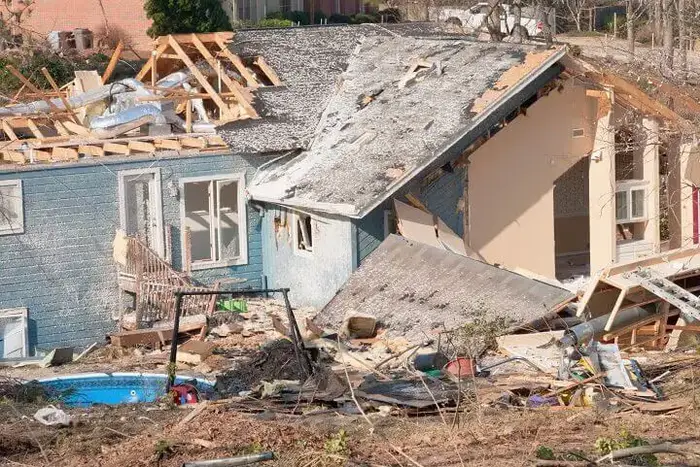
- Storms were always a problem for the grid, but the frequency and intensity of storms and hurricanes were also relegated to conventional norms rather than the extremes we’re now seeing.
- Flooding, landslides, and wildfires were also miscalculated before the realities of climate change made them both frequent and widespread.
The result is continuing and growing stress on an aging power system leading to brownouts, rolling blackouts and a continuing pattern of rapid repair rather than intelligent replacement and upgrades.
7. Geological Disasters (Earthquake, Volcanic Eruptions, Tsunamis)
On March 11th, 2011 an earthquake off the coast of Japan generated a tsunami that struck Japan’s east coast. The destruction was devastating and the failure of the Fukushima nuclear power plant not only revealed the vulnerability of power generation stations to disastrous events but continues to have impacts in Japan to this day.
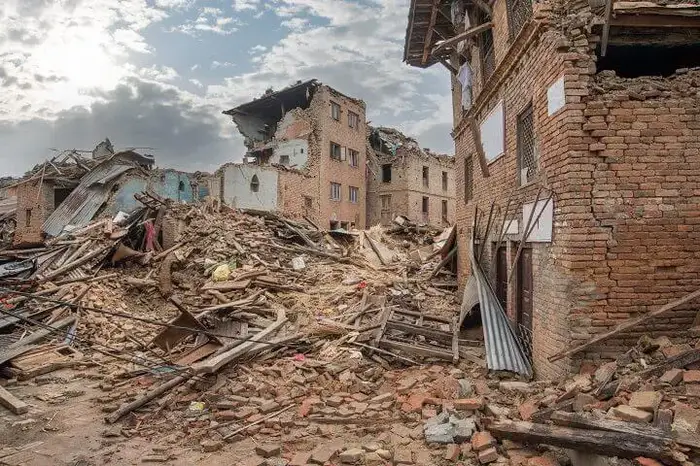
Even without a tsunami compounding the impact of an earthquake, the damage from an earthquake alone can be devastating and far reaching. Weather typically affects power lines and substations, but an earthquake affects all components in the grid. Worse, the debris from landslides and collapsed buildings complicates any efforts to repair the grid while efforts are directed towards clearing the debris.
So far, disasters have had impacts that could be repaired in days if not weeks, although Fukushima may never fully recover. It’s the truly catastrophic disasters from super volcanic eruptions, mega-tsunamis, and category 9 earthquakes that could take down the grid for years if not longer.
Preparing for Total Grid Failure
Welcome to the 19th century. That will essentially be the lifestyle for everyone following a long-duration, national grid failure. Homesteading will be the new normal, and self-reliance the only solution in a society with few manufactured resources, no easily accessible drinking water, few food sources, rare medical care, and few options for communication.
Here are some priorities and preps, but the most critical consideration is sustainability. Stockpile all you want, but any stockpile will someday run out. A good and properly packaged supply of seeds and the knowledge of how to harvest seeds from future crops may give you a better chance in the long-term than a pantry full of canned foods. Here are the priorities.
Water
You can’t live 3 days without water. Without the grid, water will become scarce, especially if you depend on a well pump. Even municipal water towers will soon run dry as the pumps that refill them sit idle without power. Here are some things to do and research to find, purify and store water:
Equipment:
- Water drums or the knowledge of how to improvise them from garbage cans or other containers. Rain water may be your most dependable source of found water and the ability to capture and contain it from your roof or tarps can not only give you drinking water but options for watering vegetables in gardens or pots, water for bathing, cooking and cleaning.
- Water purification filters or the knowledge of how to improvise them from cloth, sand, and charcoal. Natural water sources are notoriously polluted in some areas, and there is always the threat of bacteria and other pathogens in any natural water source.
- Water containers that will allow you to transport water, whether it’s walking across the street or just getting it from your water storage to your sink.
- Various hoses of varying sizes and simple valves. Hoses are the transportation system for water and if you need to funnel, direct, or channel water from one location to another you can do it best with a hose.
- A swimming pool of any size makes storing water easy especially for watering gardens or doing laundry or dishes.
- A galvanized metal wash tub is the best way to do laundry by hand or do the dishes.
- Knowledge of how to find, filter, purify and store water from a variety of sources. You can have all the equipment in the world but if you don’t where to look or what to do when you find it you’ll be a distinct disadvantage.
Food
We mentioned it once. 90% of the U.S. population is projected to die during the first year of a national grid failure mostly due to starvation. Books have been written about food survival but we’ll try to highlight the basics here.
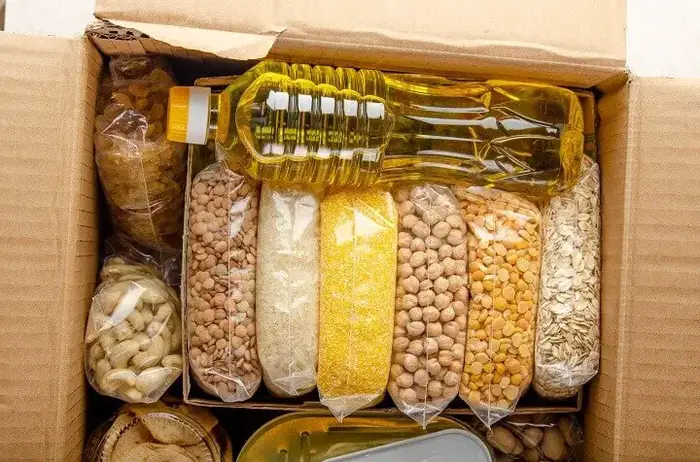
- Begin with a stockpile of enough food to last at least 3 months. This is your emergency food with the assumption that you will be able to supplement your diet with foods you forage, grow, hunt, or fish. Stockpile for longer if you’re so inclined but remember that all stockpiles run out. Do this for each person in your household.
- Seeds, seeds and more seeds. Much of your food will come from what you produce yourself. Turn every square foot of available soil into a garden. If you have a small yard, learn about succession planting, vertical gardening and companion planting. If you don’t have a yard, acquire and store pots and containers for gardening on patios, indoors or even on the roof. Learn about hydroponics. Have something growing that you can eat by every window and on every windowsill. Use your grey water to water your vegetables.
- Plant fruit trees. Plant them close to your house. It’s called defensive gardening. When you have a mature crop of fruits and vegetables in a time when people are starving you have to think about limiting opportunities for midnight raids on your yard and garden.
- Raise simple livestock if you can. Chickens, rabbits or a fish pond if you have a pond, lake or large swimming pool.
- Learn to wild forage. You don’t have to live in the wilderness to do this. Even cities offer wild foraging opportunities from dandelions to oak trees.
- Learn about food preservation techniques. It’s possible you’ll have more than you can eat. You’ll need to know how to preserve foods and do it without refrigeration. That’s a good reason to think about a good supply of canning jars and canning equipment including a pressure cooker for pressure food processing.
- Think about what you’ll need to cook your food in multiple cooking setups. Maybe your gas range still works, but it’s more likely you’ll be cooking over an open fire. Forget about gas grills. LP gas will be a thing of the past. Think about cooking grates, cast iron cookware, long handled utensils, solar ovens and any other items you’ll need to cook like a pioneer.
- Hunting and fishing is always an option but when everyone is hunting and fishing it may be slim pickins’.
Light
In a time of great uncertainty, one thing is for certain: every day it gets dark at night. There are plenty of pioneer solutions and some 21st century solutions as well:
- Candles are the oldest version of off-grid light. Stock a lot of them. Buy them cheap. Think about candle lanterns to increase the light and make them a little safer. In a pinch you can make them from tin cans.
- Kerosene or lamps that use other oils. Don’t forget to get some extra wicks.
- Duel fuel gas lanterns give off a lot of light, but like kerosene or other oil lamps, you may run out of fuel at some point. Make sure the area is vented. They give off carbon monoxide.
- Solar lights from the Dollar Store or Walmart. Leave them outside or by a window during the day and you’ll have light all night. Better yet, they don’t give off any odors or gases.
- A solar power bank with a built in flashlight. You can use them to recharge a cell phone or other electronics and the flashlight will always have power if recharged.
- A solar battery recharger can give you battery power for a range of battery powered electronics.
- LED lights draw very little power and are the best when using batteries.
- Think solar. The sun will hopefully still be shining and solar power is free and easy if you have the solar panels to capture it. You’ll also need batteries either lead/acid batteries or some of the more advanced batteries like the Tesla battery for collecting and storing solar generated power. They can power a range of things including lights.
Communication
In times of disaster people are desperate to keep in touch. The internet may actually still be working, and cell phones may have intermittent connections but you can’t count on anything when the powers out. Here are some options to consider:
- Walkie talkies can work for short range communication.
- CB radios are still around and can work off a car battery (recharged with ) or other battery power.
- Your cell phone may work so don’t give up if at first you don’t succeed.
- HAM radio is the go-to survival communication method. It’s an investment and you need a license but you’ll definitely be in touch. There are also handheld options.
- Old land lines may be one of the few functioning forms of electronics.
- The wires and hookups you need to connect a computer to an old land line. If the old land lines are working you may be able to access the Internet although connection and download speeds will be very slow. Then again, some things may still work after the grid is down.
- A TV antenna in case you want to see if there are any TV transmissions. Antennas using something called “mud flap” technology developed by the military are a good bet.
- A solar powered/hand-cranked radio. It’s quite possible that radio transmissions will eventually return and it’s the easiest way to find out what’s going on.
- Remember to think about how you may need to power some of these communication devices and have some off-grid options like solar power banks or hand crank generators.
Heat
Most of us have varying degrees of winter weather. With climate change the severity of winter weather may get worse. Without power most traditional heating options won’t work.
You need to consider some pioneer methods for heating. One of their approaches was to use multiple off-grid heat sources in the hopes that the combination would compensate for the poor performance of any one heating option.
- A wood burning stove is a standard recommendation but that assumes you have a good supply of firewood available. And here again, when everyone is burning wood for heat the supply may be thin.
- Pellet stoves are another option but you have to buy the pellets and have them in storage. On average, one 40 pound bag of pellets can keep a pellet stove going for 1 to 2 days in winter. That won’t be sustainable over a long period of time. Make sure you get a gravity feed, non-electric pellet stove.
- Solar tiles that capture sunlight through a window during the day and release the heat at night can help but just by a few degrees.
- Propane and natural gas stoves are another option. There’s a possibility that natural gas will still work in spite of a power outage because the pressure of the gas delivers it through the gas lines. How long that may continue is impossible to determine. As far as liquid propane you’ll have to have a lot in storage because any propane for sale will be gone soon.
- Insulation especially around doors and windows is another step towards keeping the heat in and the cold out.
- Plenty of blankets, quilts and winter clothing makes sense. So does sleeping in groups so it’s time to get the kids back into your bed.
Keeping Cool
Air conditioners are power hogs and when the grid is down the days of air conditioning are gone. There are numerous solutions to keeping cool and some go past the pioneers to ancient times and cultures. Here again, multiple approaches in combination help to keep you and your home cool.
- Light blocking drapes, shades, blinds or any other way to block sunlight from entering the home in the afternoon is a good first step.
- Light clothing made from cotton or silk make sense.
- Ancient techniques that encourage air circulation from the ground up are worth trying. The idea is to draw cooler air at ground level in through vents and allow vents towards the ceiling to draw the hot air out.
- Battery powered or solar powered fans make sense. Any breeze on a hot day helps.
- A swimming pool or just a cold shower or a dip in a lake can help. A swimming pool also makes for an excellent water storage option.
- Electrolyte powders that you add to water will give you an extra step towards effective hydration.
- Live in the basement if you have one. The ground acts as a natural insulator and the basement is always the coolest location in the house in summer.
- Stay indoors when the heat index is high. People who live in tropical latitudes basically hunker down indoors in the afternoon. Save outdoor activities for early morning or evening hours.
Medical Considerations
There’s quite a bit written about survival medicine. At times you may be totally on your own when it comes to dealing with any medical condition. Here are some thought starters:
- An expedition level first aid kit. They cost a lot but it’s a pretty good bet they’ll have everything you might need for any medical emergency.
- Specialized first aids kits with the equipment to treat eye injuries, simple sutures, burns or any condition unique to your family.
- A survival medicine chest with OTC medicines and medications for a range of ailments and don’t forget children’s dosages.
- A medical knowledge bank of selected books for treating a range of conditions and injuries.
- Take the time to learn some first aid skills either by doing your own research or even taking classes at a community college or through your local fire department.
Home Defense
An unfortunate reality. Desperate times can bring out the worst in people so you may need to prepare your home for the worst. The steps you take to defend your home and family depend a lot on where you live (city/suburb/rural/wilderness), and your level of concern. And it’s not just about firearms:
- Additional locks, bolts and other ways to reinforce doors, windows and outbuildings.
- Fire extinguishing equipment sufficient to put out a fire on your own.
- Exterior solar powered lights with a motion sensor to alert to you anyone approaching your home or outbuildings.
- Trip-wire alarms around the perimeter and various approaches to your property.
- Fencing around your home to at least make access and observation difficult for any intruder.
- Gated driveways or any other access points to your property.
- Bullet-proofing your home, doors and windows to the degree you feel may be necessary.
- A safe room as a secure area if your home or neighborhood is overwhelmed by any number of factors.
- Firearms and ammunition to the degree you feel necessary to defend yourself and your family.
And that’s Just a Short List
A life without electricity will continue to bring new challenges. Hopefully, some degree of power will return and the grid will begin to function again. Until then, it’s worth thinking about other preparations someone would want to make if faced with a new and sudden 19th century lifestyle.
- A generator powered by natural gas may still work even when the power it out. Generators that run on gasoline will be at the mercy of the local gasoline supply but natural gas runs through pipes on its own pressure so it’s worth looking into.
- Home schooling supplies, equipment and knowledge. It’s going to be a while before kids return to school and as life returns to some degree of normalcy, some people will want to continue to school their children while waiting for a school system to re-emerge.
- Pioneer skills that go beyond cooking to basic construction techniques, timber-frame construction, upcycling found materials, basic and advanced repairs, furniture making, quilting and sewing and the list goes on.
- Bushcraft skills that will allow you to improvise solutions when the wilderness comes to the city and suburbs. This includes improvising outbuildings, crafting everyday items from natural and found materials, building pioneer fences, and anything else that you’ll have to now make because you can’t buy it.
- Collect, store and learn about hand powered tools. Without electricity you’ll be doing a lot of things the old-fashioned way. You could also take a battery powered tool approach assuming you have the solar capability to recharge the batteries, but powered tools only last for years. Hand tools last for centuries.
- Barter skills and the ability to craft and create items for barter. Without electric power commerce will radically change. If you think there’s a coin shortage now there will be a total currency shortage if the grid is down and forget about debit and credit cards. A barter economy will quickly become the new currency for the purchase and trade of many everyday items.
How Long Could This Last?
According to a report from the Congressional EMP Commission, a nationwide blackout of the electric power grid and grid-dependent critical infrastructures – i.e., communications, transportation, sanitation, food, and water supply – could last a year or longer.
That assumes that a rogue nation does not take advantage of the crippling effects of a grid failure and make things worse. Then again, it may have been that same rogue nation that caused the collapse in the first place.
The most shocking video can be found below.
Liberal’s hidden agenda: more than just your guns…
… the impending collapse of the US food supply system
will steal the food from your kids’ tables…Watch this video below to find out the great secrets hidden by the government.

-
Governments create energy crisis, impoverish their own people- The Ineptitude Is so Vast, It Cannot be Explained Away By Mere “Incompetence”
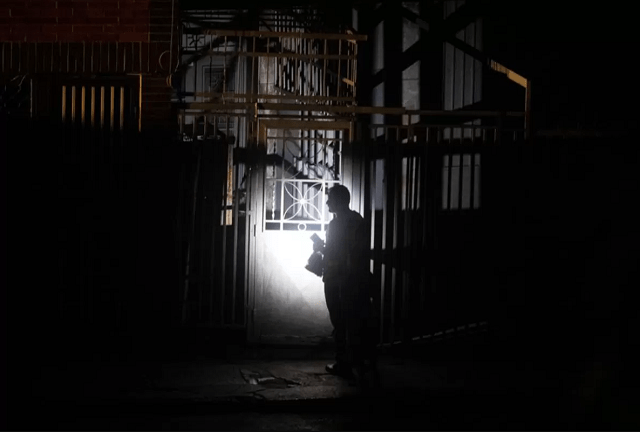
This featured article provides an insightful summary!
It is becoming clear that Western Civilisation is facing an energy shortage of crisis proportions as a direct result of the idiocy of governments heavily infiltrated by subversive factions.
“Idiocy” may be too charitable a word for it. Downright sabotage is probably a more apt term for:
Buying into, furthering and expanding the “climate change” psyop that promoted a dangerously false “climate crisis” narrative.
Pursuant to that false narrative and resultant hysteria hobby-horsing the shutting down of existing energy production (fossil fuels, nuclear and so forth) before adequate replacements could be brought on line in sufficient volume.
Selecting and pushing inadequate replacements in the form of wind and solar that, whilst being ingenious technologies, were unsuited to the task of powering the grids of modern nations.
Steadfastly neglecting or ignoring much more adequate replacements such as nuclear (especially the safer/cleaner thorium reactors) and wave/tidal power.
Concealing the dangerous shortcomings of wind and solar from the public. As a result, by the time they have become evident (now) and can no longer be hidden, we find ourselves with a catastrophe on our hands.
In our view, the foul-ups are so glaring and so catastrophic they cannot be explained away by “mere stupidity” on the part of our politicians and their puppet masters.
This is an act of sabotage, an effort to plunge into poverty and bring down an entire civilisation.
The damage of course can be repaired but it is so extensive the job is going to take a few years. So things are likely to be tough for a while. But if we unite, stand shoulder to shoulder and help one another as a community, we’ll get through it.
It is our view at this time that our government is so heavily infiltrated at the highest levels that it will make the right noises but actually do very little to earnestly and honestly handle the situation and the very real dangers in it.
And of course it will be the nation’s less well off and its working producers who will bear the brunt of the suffering created by the wealthy parasites and dopey utopians at the top.
So the wealthy parasites, dopey utopians and their collaborators will have to be booted out of the way in order to get done what needs to be done.
What is needed, should we find ourselves governed by people who give a crap is:
A crash program to restore oil and gas and perhaps coal power as quickly as possible.
Oil, gas and coal to keep the nation self-sufficient and the show on the road whilst a crash program is engaged to make the country fully and abundantly self sufficient in nuclear and wave/tidal power. The more abundant and thus cheaper we can make energy, the more we open up the possibility of an economic boom and genuine prosperity.
As replacement technologies come on line, then older technologies, should the People so desire, can be phased out in a sensible manner.
The dark continent: How ‘green’ power insanity will black out Europe
THE European electricity grid is hurtling towards disaster, a new paper from the Global Warming Policy Foundation warns.
Countries are closing reliable nuclear and fossil-fuelled power stations while hoping interconnectors – cables linking different grids – will make up the deficit. But they won’t, according to the paper’s author, Alexander Stahel, a Swiss-based commodities expert.
He explains that the European grid has relied on French and German power surpluses for many years. However, with nuclear power in both countries being wound down and the two likely to soon become net power importers – and with fierce international competition for scarce gas supplies – the whole continent is now left hoping for Scandinavian hydro power and occasional surpluses of UK wind to save it.
According to Stahel, the numbers just don’t add up, and he warns that restrictions on fossil fuel investment are making things dramatically worse.
‘Fossil fuels are currently vital for keeping the lights on, but we are undermining the industry’s viability,’ he says. ‘It needs 300billion US dollars of re-investment every year, for oil and gas alone, just to maintain current production levels.
‘However, convinced by policymakers that investments in production will become “stranded”, it is not even investing half this amount.’
Stahel says Europe must simply accept that its decarbonisation targets are not achievable.
The European electricity grid, he writes, is a modern miracle – the largest synchronous electrical grid (by connected power) in the world. It interconnects 520million end consumers in 32 countries, including several that are not EU members, such as Morocco and Turkey. Most importantly, ‘it is built on physics, not ideology’.
The generation of alternating current that flows through the grid must match consumption, because electricity largely cannot be stored. This simple fact is critical, says Stahel, for understanding the problem that faces it.
‘In order to ensure that supply meets demand across Europe, electrical load is constantly being forecast, in blocks as short as 15 minutes long, and thousands of generators bid to meet that demand.
‘The network frequency is the key measure of the health of the grid. Measured locally, but of supra-regional significance, it is the first indicator of an imbalance between supply and demand.
‘It must be kept within very narrow bounds; a failure to do so would lead to damage to infrastructure or even the complete shutdown of the system. Frequency deviations – incidents – happen for many reasons, but have become more common as the share of wind and solar on the grid has increased.
‘Renewables are not dispatchable – their output cannot be increased minute to minute to meet a shortage of supply – so from a grid perspective they are unreliable. The impact of their widespread deployment is clear from the fact that frequency incidents have increased from 33 hours in 2020 to over 52 hours in 2021, an increase of more than 50 per cent in just one year.
‘In 2021 alone, the European grid had two major (Scale 2) incidents, for which final explanatory reports had to be prepared by an expert panel at the grid operator, Entso-e (European Network of Transmission System Operators for Electricity). The underlying issue is that the European grid is increasingly unable to supply enough power to meet demand.’
A few countries, he notes, are particularly problematic.
Italy is by far the worst offender, having closed its nuclear power stations in the 1990s, building only a few onshore wind farms and none offshore at all, and therefore now having an almost complete reliance on natural gas, for which it has failed to secure a reliable supply.
Austria has a mix of hydro and natural gas, but relies on Germany to balance the books. It appears to have escaped the notice of the country’s leaders that Germany has been engaged on the Energiewende– a shift to renewables and away from nuclear power and fossil fuels – for the last 20 years.
Hungary relies on Russian supplies of natural gas to fuel its electricity grid.
Slovakia and Finland have at least managed to bring some new nuclear power onstream, but it has been hard and expensive and the process is yet to be completed.
The Netherlands relies on natural gas, and the country is sitting on the massive Groningen gas field. But the Dutch have decided to phase out production there, leaving themselves at the mercy of international LNG (liquefied natural gas) markets.
Stahel identifies four major short-term issues, and one gigantic structural long-term problem, all of which should alarm policymakers across the continent.
But the problem is the policymakers themselves – ‘the handful of people in positions of power who have committed us to a dramatic reduction of our carbon dioxide emissions’, and the European Commission, which has transformed these commitments into a legal requirement to reduce emissions by 55 per cent from 1990 levels before 2030 – the so-called ‘Fit for 55’ laws, setting in motion a change to society of a scale that is hard to comprehend.
-
Vaccination Increases Infection Risk by 44% (Oxford Study Shows Post-JAB Increased Infection Risk)
The following featured article discusses how, far from being ineffective, the covadiddlyjabs actually INCREASE your chances of infection and hospitalisation.
An increased risk of Covadoodle infection is hardly worth risking the manifold harms now clearly linked to the jabs, such as heart attacks, cancers, autoimmune diseases, fertility problems and other known side effects, especially as the alleged disease itself, comparable in the vast majority of cases with colds and flu, carries a very low overall fatality risk.
It also means there must be justice for the millions of people conned, coerced, cajoled, bullied, threatened or otherwise manipulated into submitting to these dangerous and ineffective jabs on false pretences and outright lies. And for those victimised, denigrated and ruined because they were brave enough to speak out and try to warn others.
When subjected to medical intervention, the principle of INORMED CONSENT is a just and rational principle. Indeed it is a crucial human right if we wish to safeguard humanity from mass murder by malicious lunatics.
The public in this instance are being systematically MISinformed with evident malice aforethought and as a result an as yet unknown but certainly unacceptably large number of people are going to suffer illness and death.
DEFINITIONS
- What’s the difference between disinform and misinform? Disinform means to intentionally provide or spread false information with the intent to mislead or deceive. Misinform, which is much more commonly used, means to provide someone with false information, but it doesn’t necessarily mean that it is being done intentionally.
Vaccination Increases Infection Risk by 44%,
Oxford Study Finds
Two doses of COVID-19 vaccine make you 44% more likely to be infected, a study from Oxford University has found, contradicting the basis of global vaccine policy, which assumes vaccination significantly cuts incidence and transmission.
The study, published in the Lancet, looked at all infections reported in England among adults registered at a medical practice from December 8th 2020 to November 17th 2021, meaning it spanned the Alpha and Delta periods. It used a case-control design to estimate vaccine effectiveness, allowing potential confounding factors such as age, sex and underlying conditions to be controlled for, while individuals with prior infection were excluded.
The results for effectiveness against positive Covid test (i.e., reported infection), which were found buried away in the supplementary appendix, are shown below.

I’ve highlighted in yellow three key figures. The top two show that in the two weeks following the first jab individuals were three to four times more likely to test positive for Covid than their unvaccinated counterparts. This is further confirmation of the post-jab spike in infections that has often been noted and which there is evidence is a result of the vaccination temporarily reducing immunity.
The third figure shows that two weeks or more after the second jab – which during 2021 was regarded as ‘fully vaccinated’ – individuals were 44% more likely to be infected than their unvaccinated counterparts. This is negative vaccine effectiveness (where infections are higher in the vaccinated than the unvaccinated) of minus-44%. This negative effectiveness is in line with what was seen in the raw data from England at the time and also in studies from other countries, but contradicts the Government’s official estimates, which claimed effectiveness to be 60-85% against Delta infection. The new study indicates that the negative effectiveness was not just a result of confounding factors or a ‘catch-up’ effect, where the vaccinated have lower infection rates initially then higher infection rates as the effect of the vaccine wears off, as some have claimed.
Acknowledging the figures, the authors write: “Surprisingly, we observed a higher risk of test positivity after vaccination with one or two doses across all BMI groups, which is contrary to evidence reported by the U.K. ONS.” What they don’t mention is that it is fully in line with data from the UKHSA, nor that the ONS is known to overestimate infection rates in the unvaccinated because it underestimates the population – the ONS puts the unvaccinated adult population at 8% whereas the NIMS database puts it at 19% (and surveys higher still at 26%).
The authors state that the “hospital admission and death outcomes were considered more robust outcomes than infection” owing to “variability in testing” and a potentially “high proportion of asymptomatic infections”. The implication is that unvaccinated people were less likely to get tested when infected, suppressing the positive test rate in the unvaccinated. No evidence is provided for this claim, however, nor any attempt made to quantify the possible size of the difference.
The study was published in June but went largely unnoticed until Alex Berenson wrote about it last week. Alex also draws attention to the fact that vaccine effectiveness against hospitalisation and death is much weaker than was claimed at the time.

Vaccine effectiveness against death 14 or more days after the second jab is just 61% (the first highlighted figure), well below the 90-99% claimed by the Government. Note that the overall protection will be even lower owing to the vaccinated being more likely to be infected: the 44% higher infection rate mentioned above would reduce the 61% effectiveness to just 34%.
Oddly, the vaccine effectiveness against death in the week following the third jab (the second highlighted figure) jumps up to 97%, from 61% following the second jab, despite this being before the effect of the booster should kick in. This oddity is not explained.

Looking at the hospitalisation figures, there is a disturbing spike in the weeks following the first jab, hitting over twice as high (2.02) in the second week. Why are the vaccinated up to twice as likely to be hospitalised with Covid than the unvaccinated in the weeks following the jab?
The figures show that having two vaccine doses reduces hospitalisation risk by 66% once 14 days post-injection (though once again there is an unexplained leap in efficacy from 19% 28 days after dose 1 to 67% in the week after dose 2). The 66% is markedly lower than the 90-99% claimed at the time, as shown below in the table from a UKHSA Government report in September 2021.

UKHSA, September 2021
The new figures are much more in line with what was observed in the raw UKHSA data. But it means we’re left without explanation as to why the clinical trials and Government studies showed high efficacy for a two dose course, when observational studies of the real-world evidence now find negative effectiveness against infection and much lower than advertised effectiveness against serious disease. An explanation is clearly required. And given the earlier studies were used to inform both individuals’ choices and public policy, including medical coercion, serious lessons need to be learned.
-
Urban Survival Mistakes That Could Get You Killed
Recently, I wrote an article about 11 urban survival skills that could save your life. And when I chose that title, I wasn’t exaggerating. Having those skills during an urban disaster could literally mean the difference between life and death, which is why it’s so important to start practicing them now.
In this article, I want to switch gears and talk about urban survival mistakes that could get you killed. And again, I’m not exaggerating. If you make any of these mistakes, it could cost you your life. So now that you understand how serious this, let’s move on to the list.
1. Bragging About Your Stockpile
I know, it’s hard to resist. You spend so much time thinking about preparedness, saving money, looking for great deals, gathering supplies, practicing skills, and so forth, that you’re probably proud of yourself for accomplishing so much—and you should be.
But what do most people do when they’re proud of something? They start telling other people about it, and that’s where you’re liable to get yourself into trouble. When it comes to preparedness, you shouldn’t tell anyone except for those you trust completely.
If you tell the wrong person, then during the next major disaster, someone might say, “Remember such-and-such who said they have lots of food and supplies? Let’s find out where they live.” Hunger can turn people into absolute animals. If they are desperate enough, they’ll do anything to get your food.
2. Not Knowing Your Own City
You know what happens when a disaster is bearing down on a city? Everyone tries to leave at the same time. When that happens, all the highways and interstates leading out of town turn into parking lots. Sitting in your car during a traffic jam is the last place you want to be when a hurricane or something worse is on the way.
While you still have time, get some detailed maps of your town and drive around, getting to know all the shortcuts and backroads. You need to know all the best ways out of town, and you should highlight on your map. If one road is blocked, you need to know if there are any other ways to go.
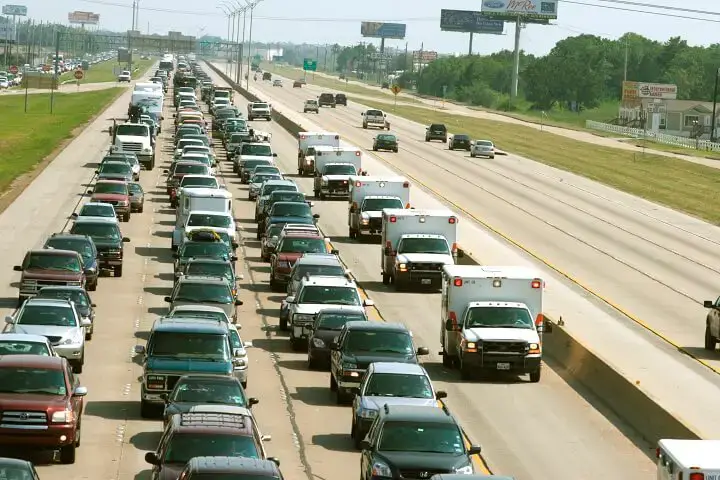
You also need to identify any potential chokepoints in your town—tunnels, bridges, and particularly busy intersections. Steer clear of these places, even if it means going the long way or going off road . (Speaking of that, make sure you have a bug out vehicle that can do that.)
Also, stay far away from any area where there could be rioting or looting. In places like that, you could get trampled, exposed to teargas, or even arrested.
3. Breaking the Law
If you see people breaking through store windows and grabbing everything they can, you might be tempted to grab your share. After all, the owners can just write it off, right? Maybe, but even if the store owner has insurance, someone somewhere has to pay for it. Nothing’s really free.
But ethical issues aside, looting or breaking the law in any way during a disaster could get you killed. You could get trampled in a riot, trapped in a building that’s on fire, or attacked by someone who’s even greedier than you are. Even if there are no police officers around, don’t break the law.
And that includes shooting looters on sight. We’ve all seen those looters will be shot signs, but there are several reasons why this is a bad idea:
- It lets people know you have guns. If they realize this, they might try to sneak in and ambush you.
- If you shoot at looters, they might shoot back. In most cases, it’s simply not worth the risk.
- Once law and order is restored, you could be charged with murder. Lawyers could even use your sign as evidence of premeditation.
Just to be clear, I’m not saying you shouldn’t defend yourself with firearms. Of course you should. I’m saying you shouldn’t just shoot someone the moment they step foot on your property. Instead, wait until they are actually breaking into your home and/or attacking you. Then you can legally defend yourself with a firearm.
4. Drawing Attention To Yourself
As I said in the last point, using firearms could draw attention to yourself, but there are several other ways you could draw unwanted attention. For example:
- Talking too loudly or making lots of noise. This is especially important if you live in an apartment or townhouse.
- Having lights on at night when everyone else is without power. (If you must use lights at night, at least blackout your windows with thick curtains or something.)
- Cooking food, especially on the backyard grill. If you need to cook, try to do it indoors and don’t use any aromatic spices or ingredients.
If the grid is down and people in your city are getting hungry, you want to make it seem like your home is abandoned. Of course, people could still break in looking for supplies, which brings me to the next mistake…
5. Neglecting Home Security
Depending on the nature of the disaster, you might decide to stay home and ride out the disaster. If you do, you need to turn your home into a fortress. Keep in mind that burglaries skyrocket during disasters, so you need to do everything you can to deter them and make your home impenetrable.
You’re much better off beefing up your home security than shooting anyone that approaches your home. Hopefully, looters will decide your home is more trouble than it’s worth and move on to the next home.
6. Refusing To Bug Out
As I said, you might decide to bug in until the disaster is over. That’s fine, but you need to know when it’s time to bug out. In fact, you should sit down and make a list of scenarios where bugging out would be the prudent choice. That way when the time comes, you won’t waste time trying to decide what to do.
Don’t be one of those old folks who die in hurricanes and wildfires because they refused to leave their home. If there is any chance that your home could be destroyed or that deadly toxins/diseases/radiation are spreading across your city, leave immediately.
7. Not Having Enough Fuel
Most people don’t get gas until they have about a quarter of a tank left. Don’t do that. You should never let your tank get more than half empty. Additionally, you should have plenty of extra gasoline stockpiled.
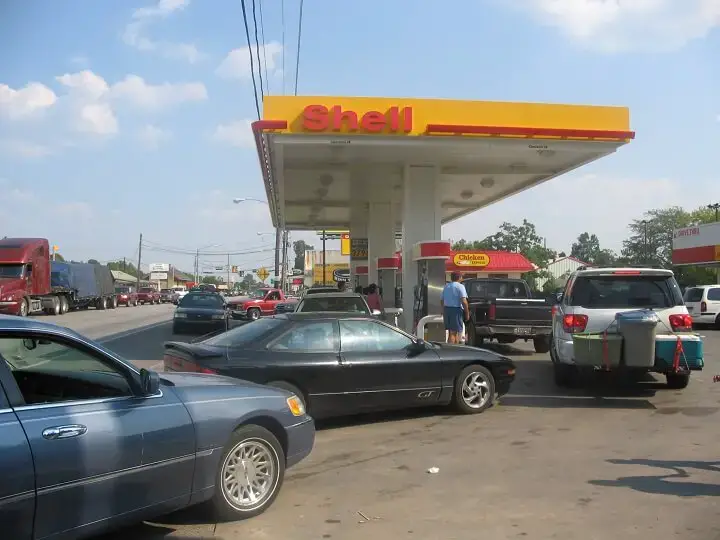
Remember, if you’re trying to evacuate the city, you’re going to burn a lot of gas along the way, especially if you’re sitting in a traffic jam. And if gas stations are all closed or out of fuel, you could end up stranded on the side of the road. That’s the last thing you want.
8. Being Out Of Shape
Think about the kinds of things you might do during a disaster: walking, climbing, carrying heavy supplies, moving branches and rubble, running from thugs or riots, and so forth. If you’re the kind of person who gets winded from getting up and walking to the fridge, you have a problem.
You don’t have to be in amazing shape. You just need to be in decent shape for your age and weight. If you’re leading a completely sedentary lifestyle, at least start going for walks every day. After a few weeks, you’ll be used to it, and you’ll start to have more energy. Then you can start adding in some functional fitness exercises.
If you’re still not convinced this is important, read my article, Getting In Shape For The End Of The World.
9. Not Stockpiling & Purifying Water
You should already have water stockpiled, but it never hurts to have more. The moment you hear about a disaster, start filling up your sinks, bathtubs, and any other containers you have with water. Do it quickly before the water is shut off or contaminated.
Speaking of which, make sure you always purify tap water. During natural disasters, tap water can become unsafe due to damaged pipes and contaminants leaking into them. There have also been disaster scenarios where water departments didn’t properly treat their water because they didn’t have the funds or workers stopped showing up.
Conclusion
Any of the above mistakes could get you killed during a disaster, and that’s not an exaggeration. Please take the time to prepare properly and ensure you and your family‘s survival.
-
Hello World!
Welcome to WordPress! This is your first post. Edit or delete it to take the first step in your blogging journey.
-
Subscribe
Subscribed
Already have a WordPress.com account? Log in now.
 Site Title